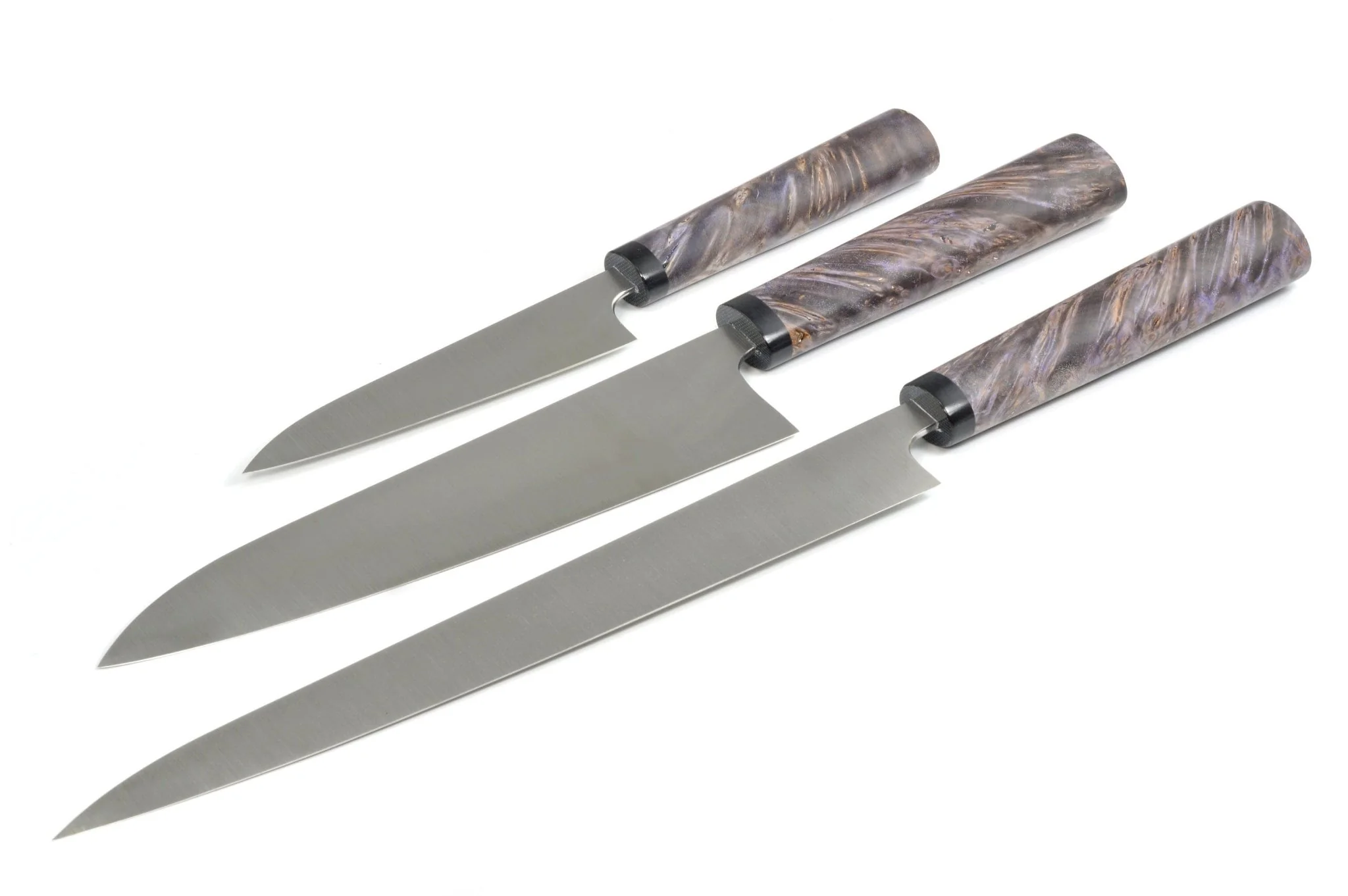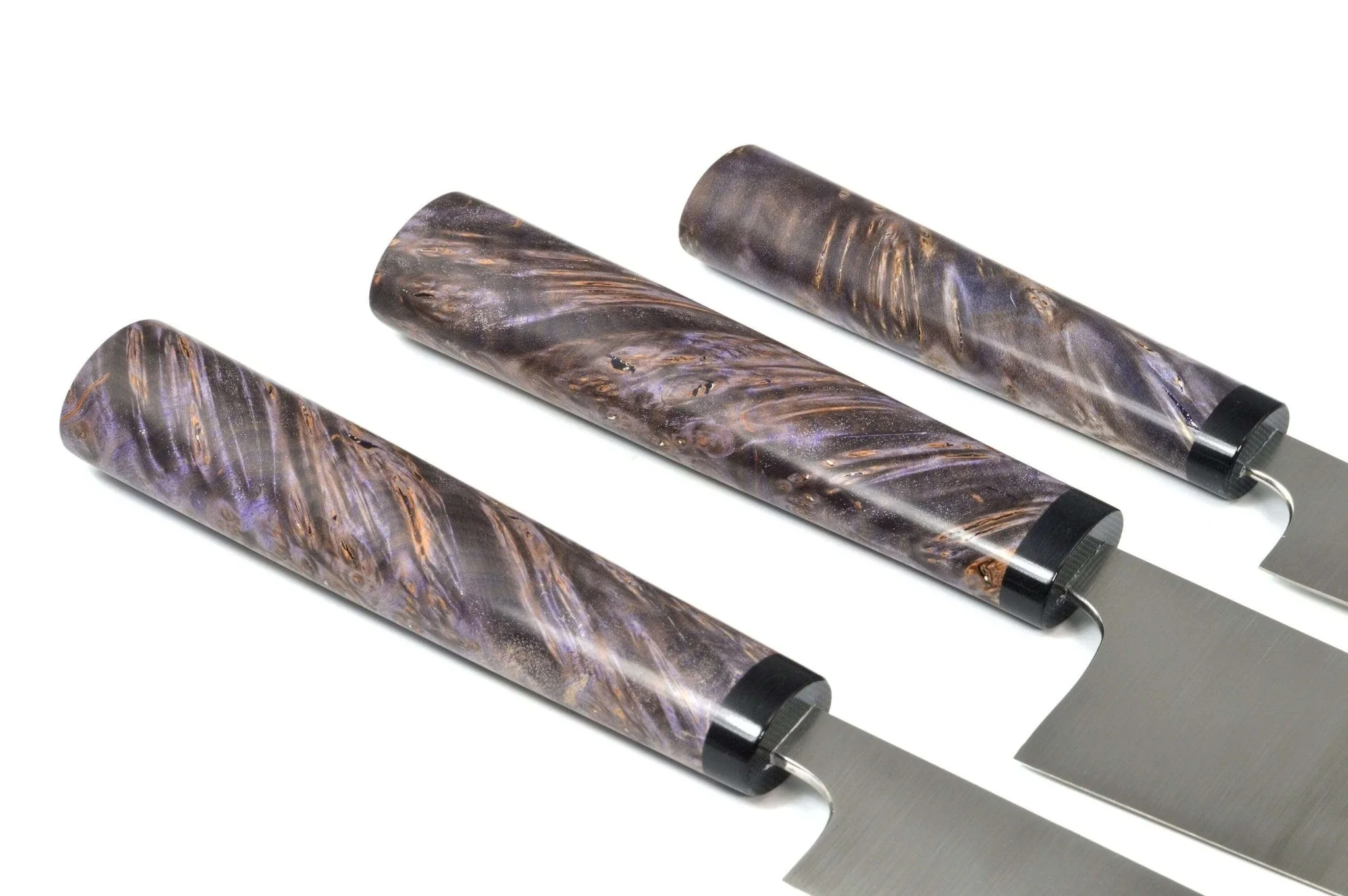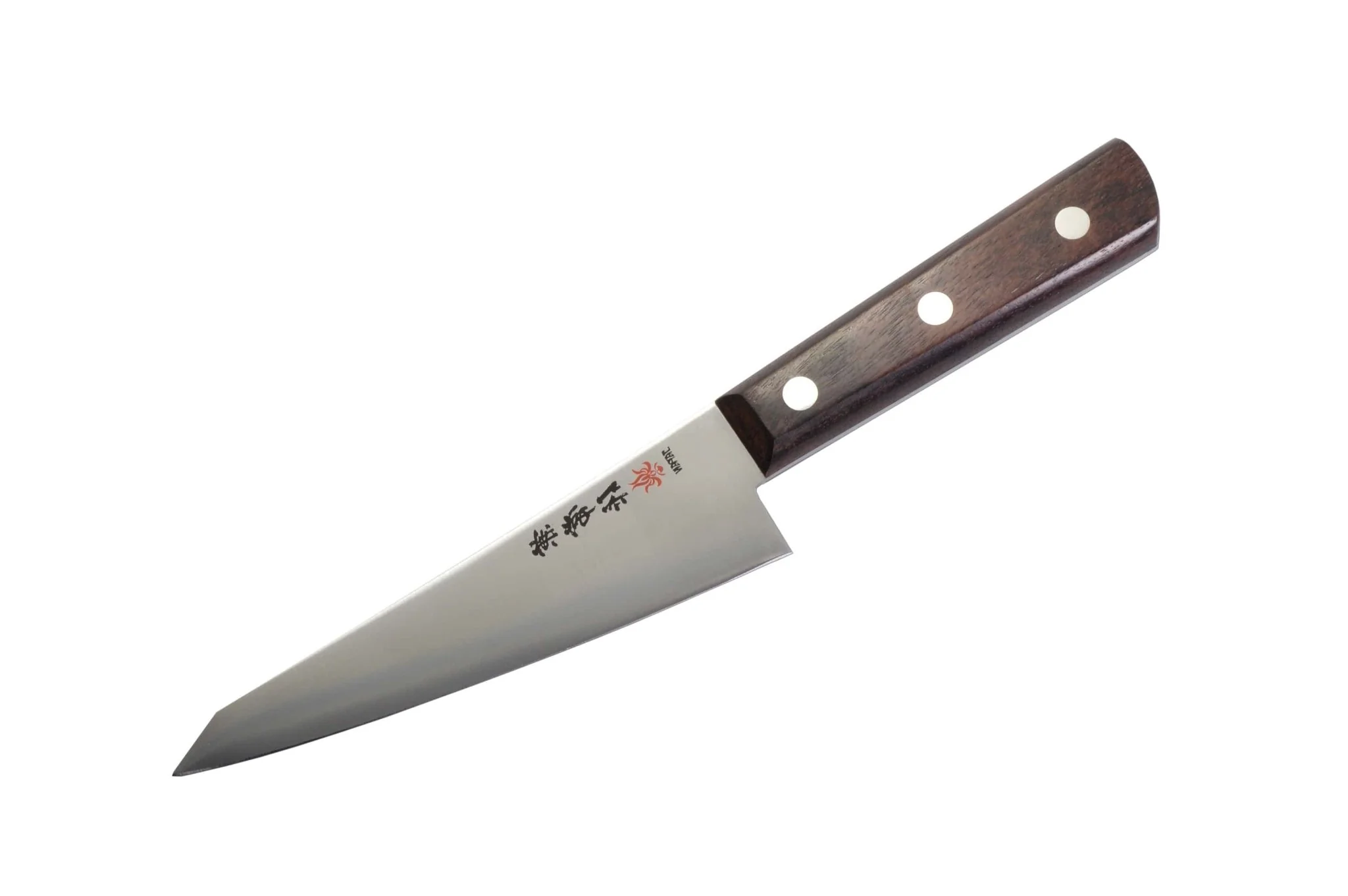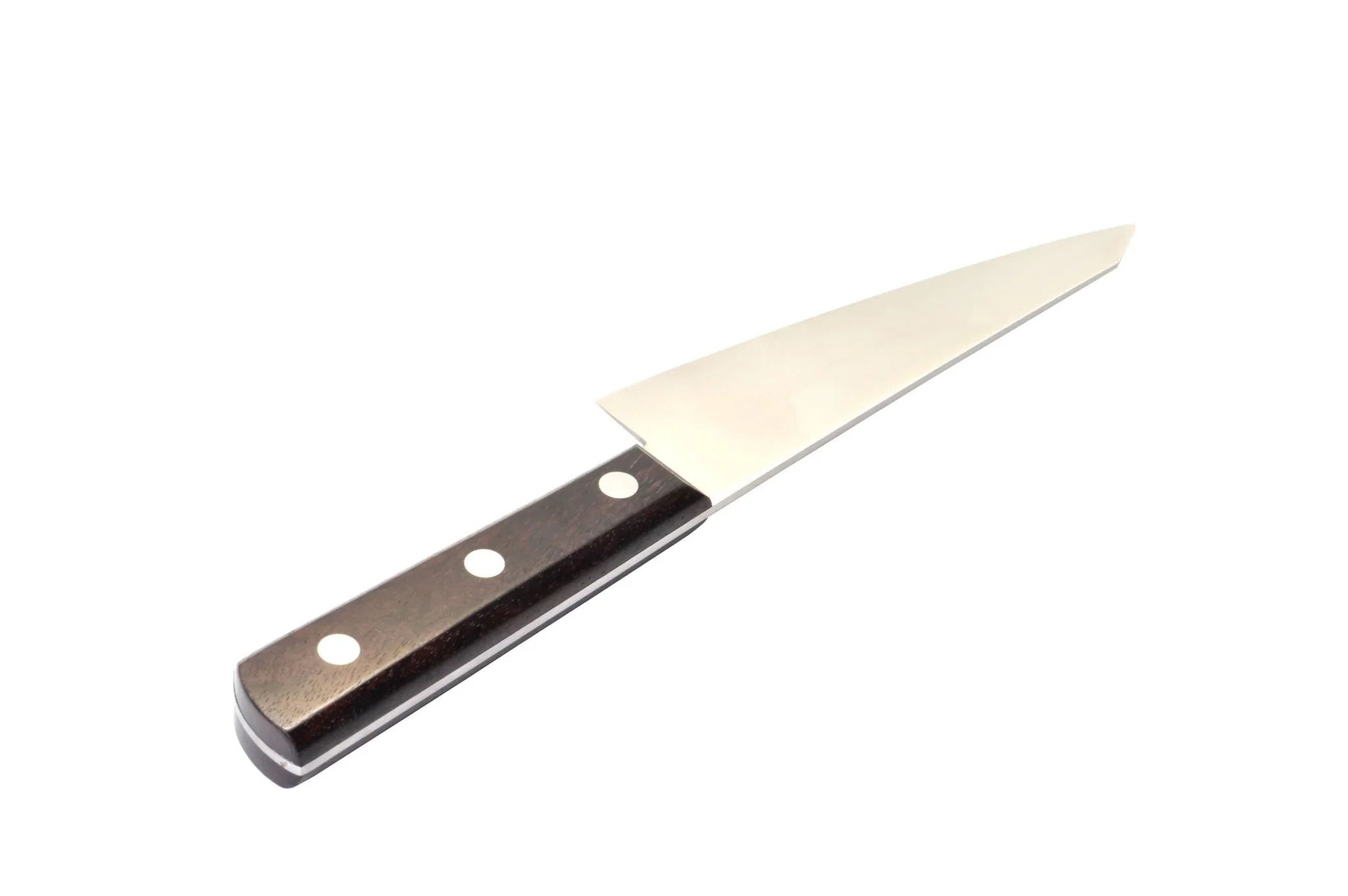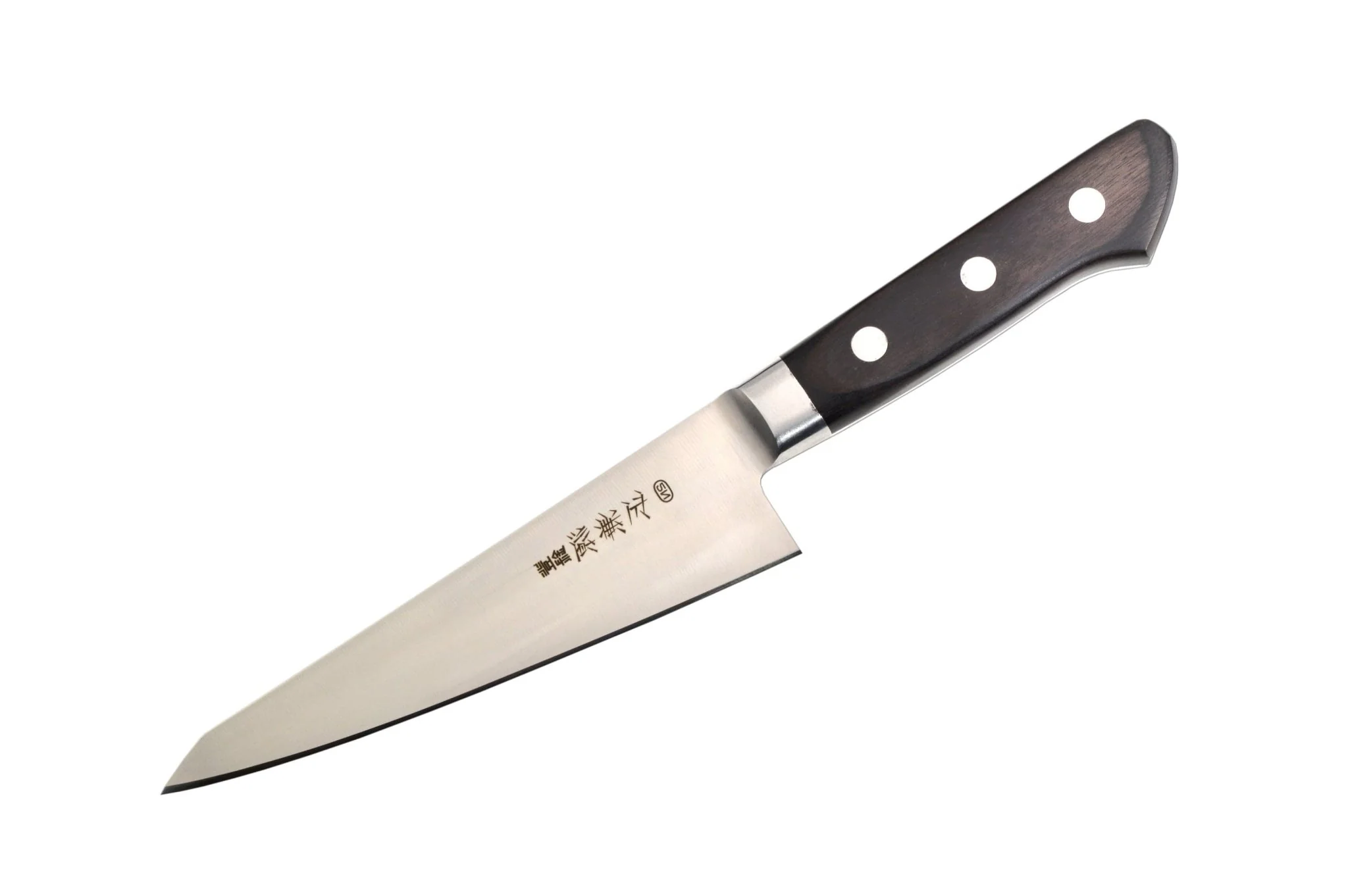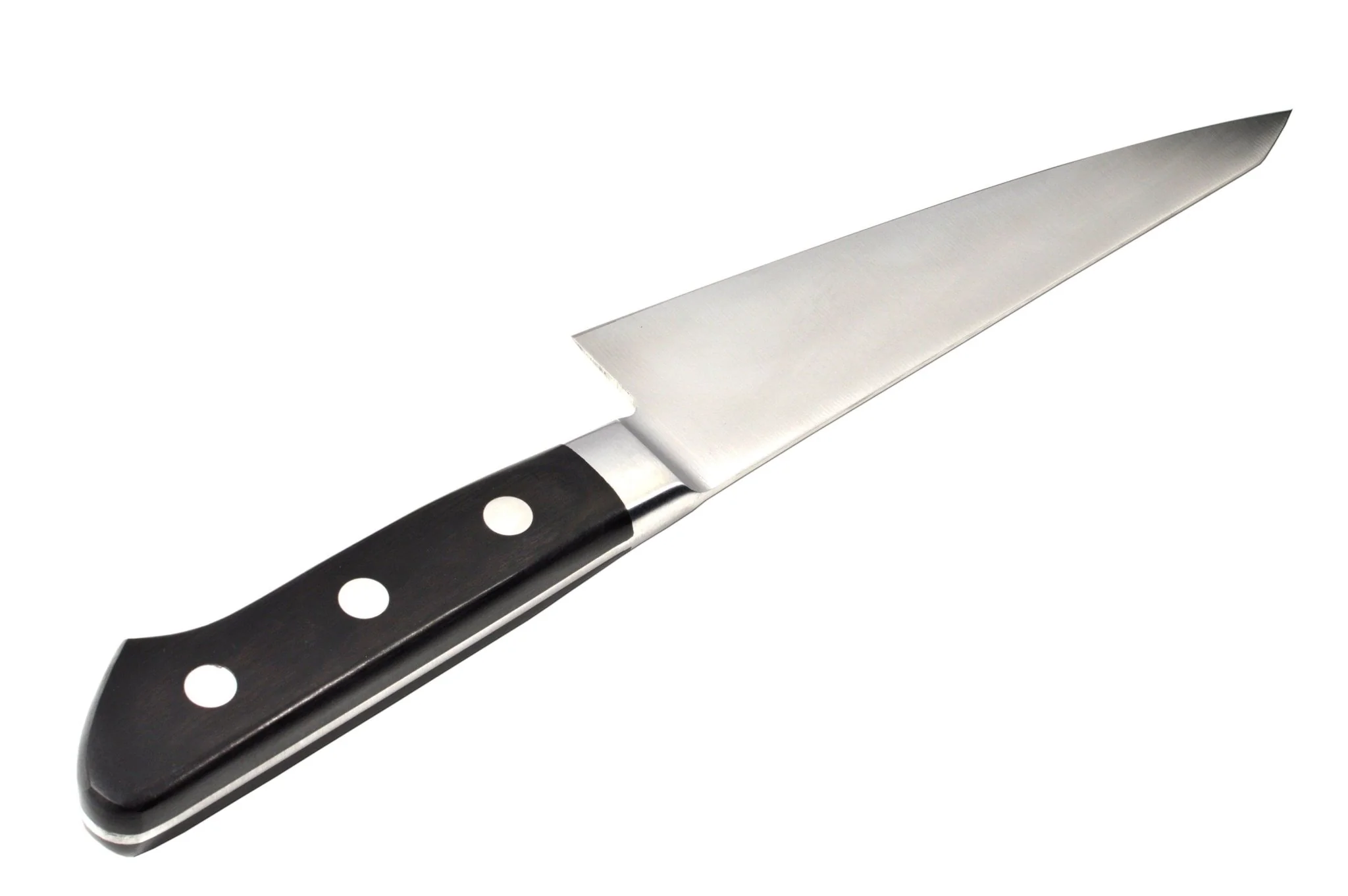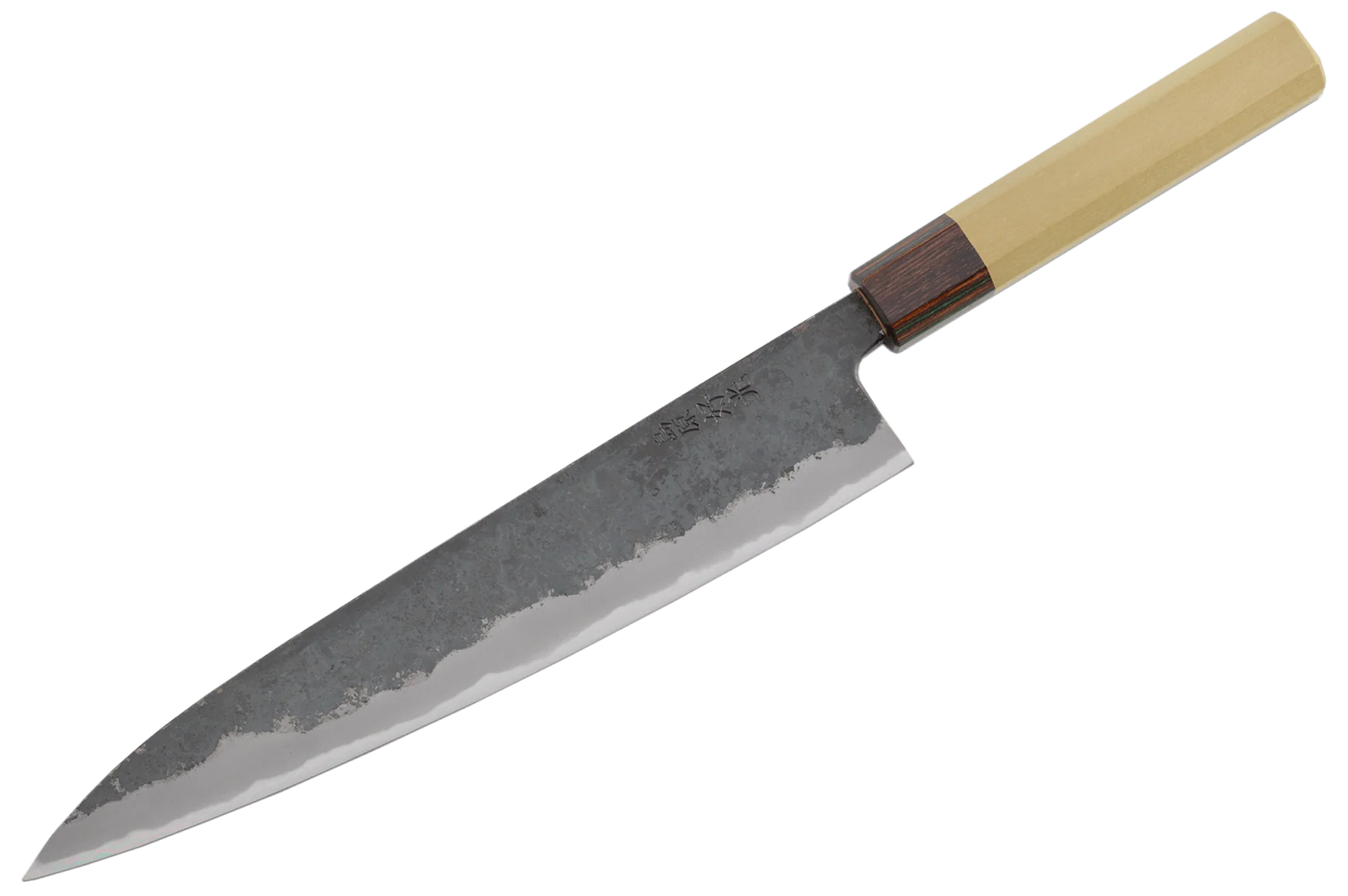
Yosimitu Kajiya Poplar Gyuto 240mm
SPECIFICATIONS
Knife Style: Gyuto
Steel Type: Carbon Steel
Blade Material: Shirogami White #2
Blade Finish: Kurouchi
Blade Hardness: 62HRC (+/-1)
Bevel: Double
Handle: Poplar
Blade Size: 240mm
Heel Height: 46mm
Spine Thickness: 2.50mm
Weight: 160g
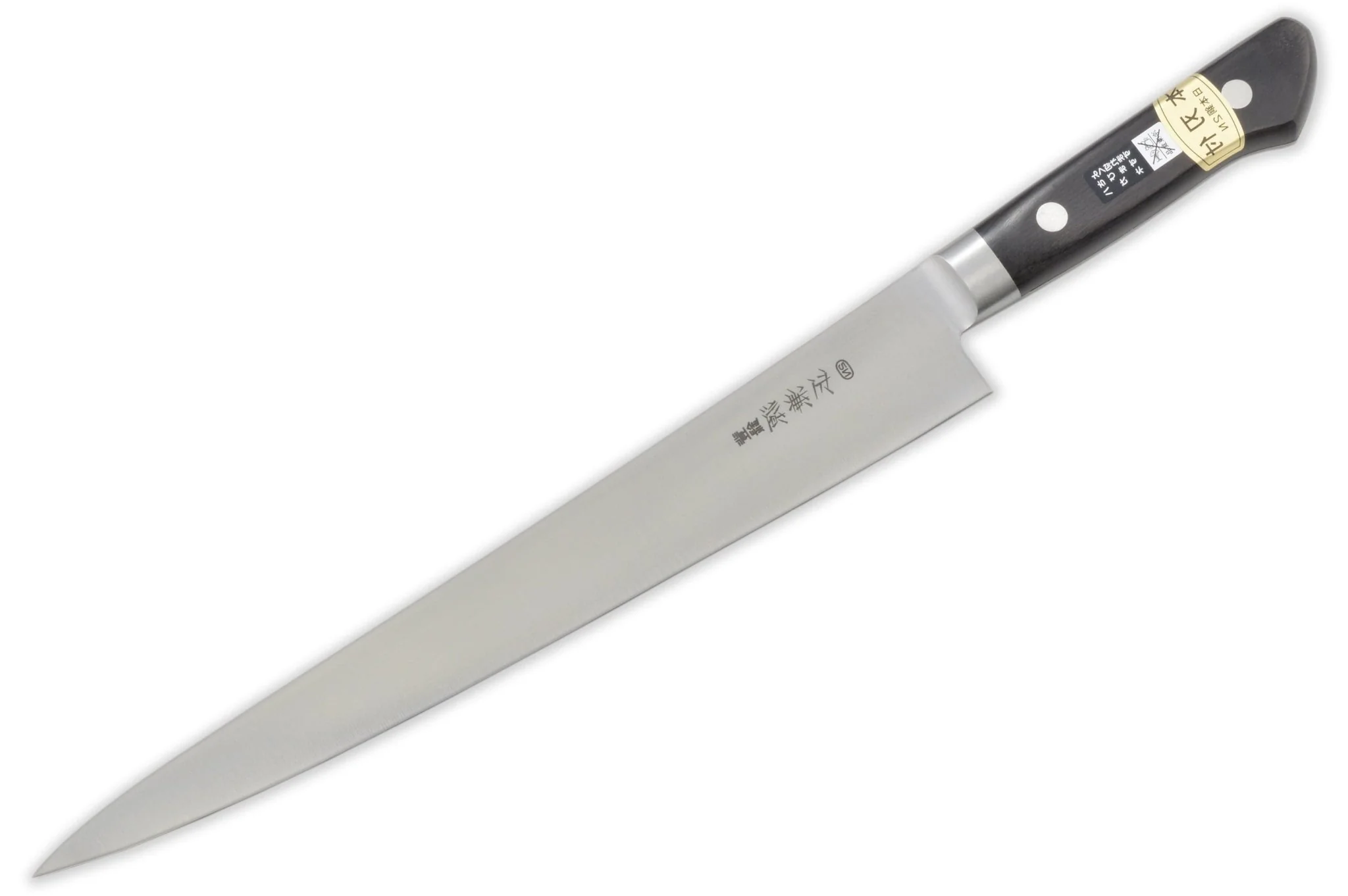
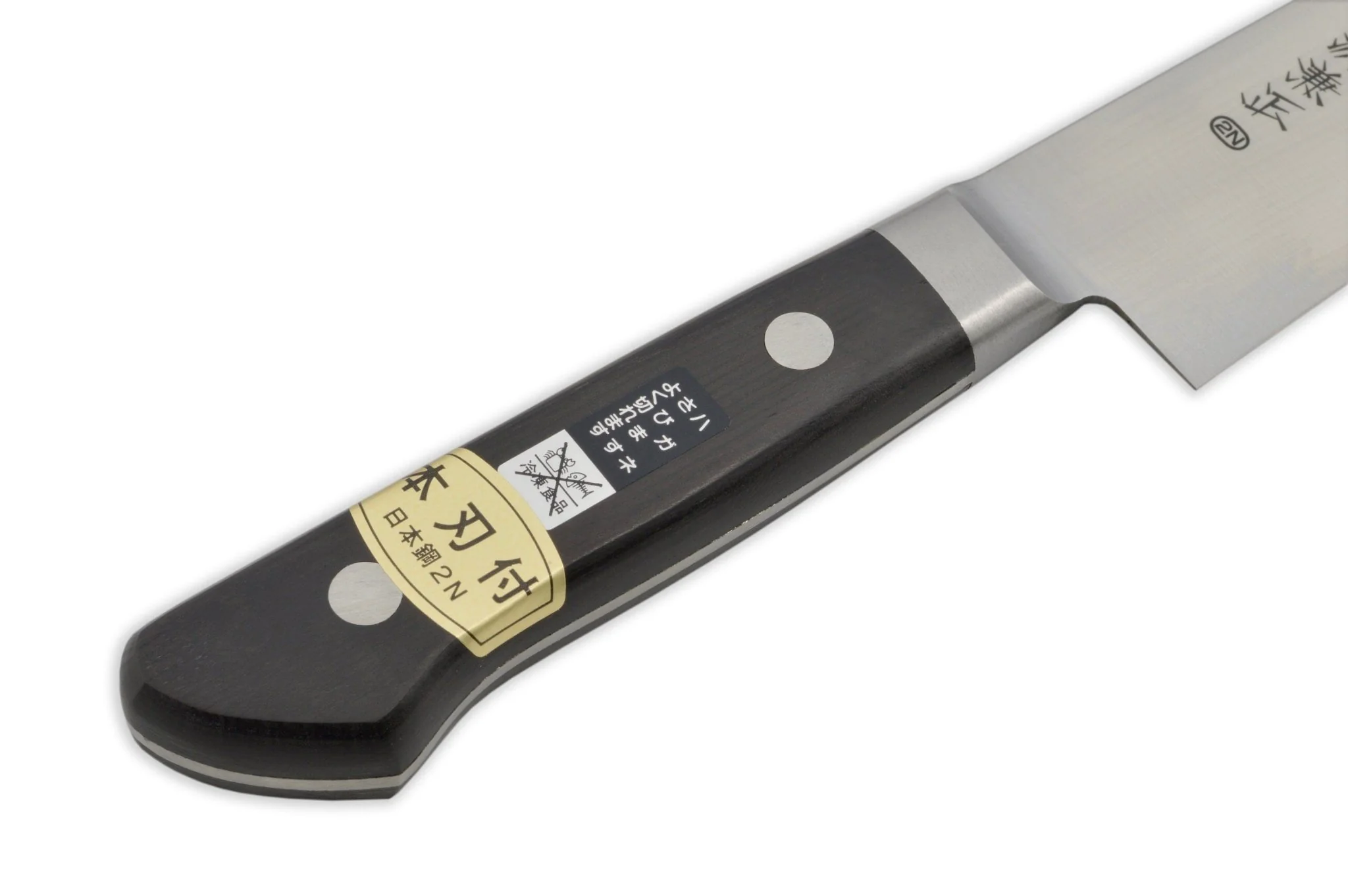
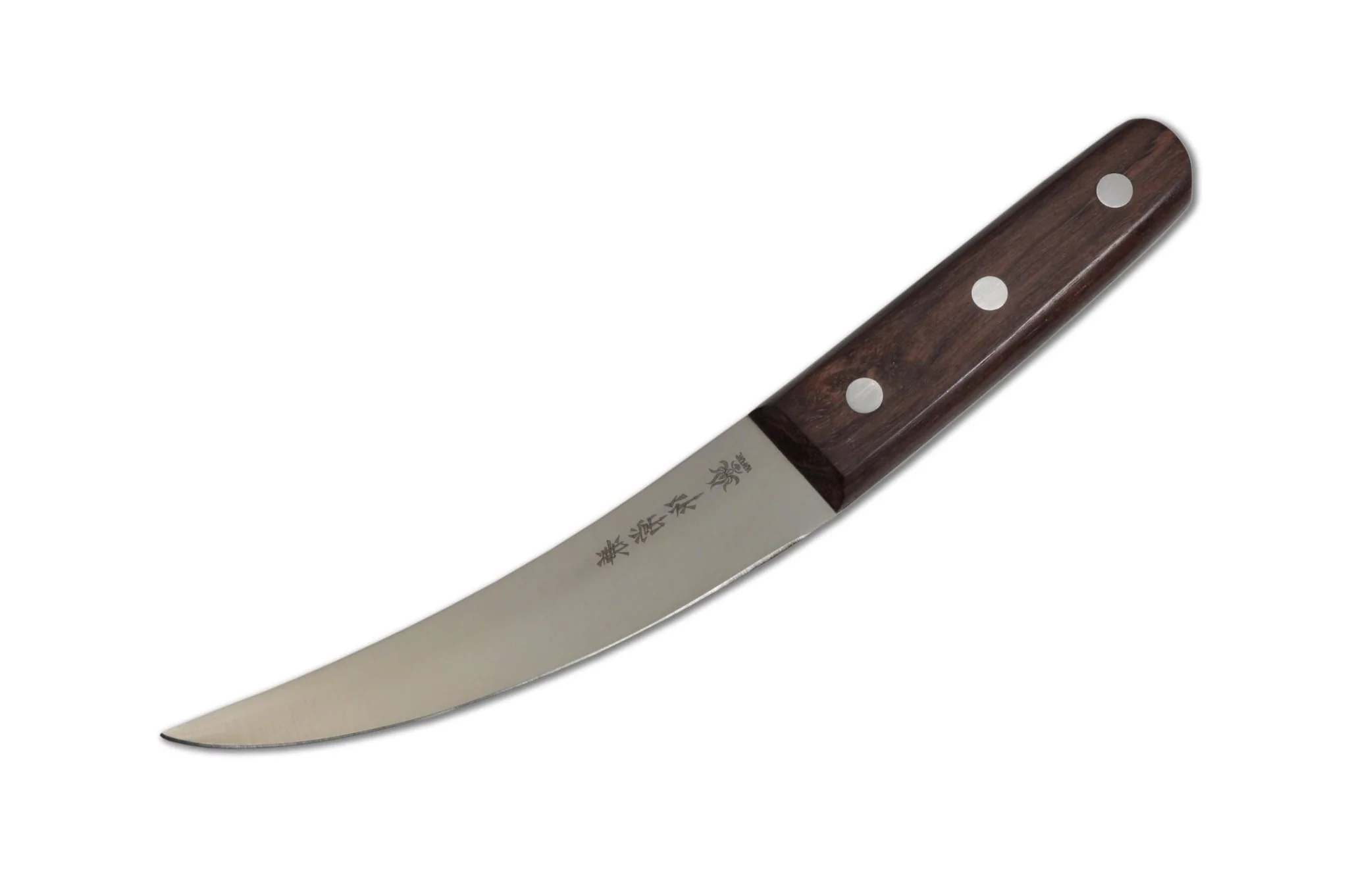
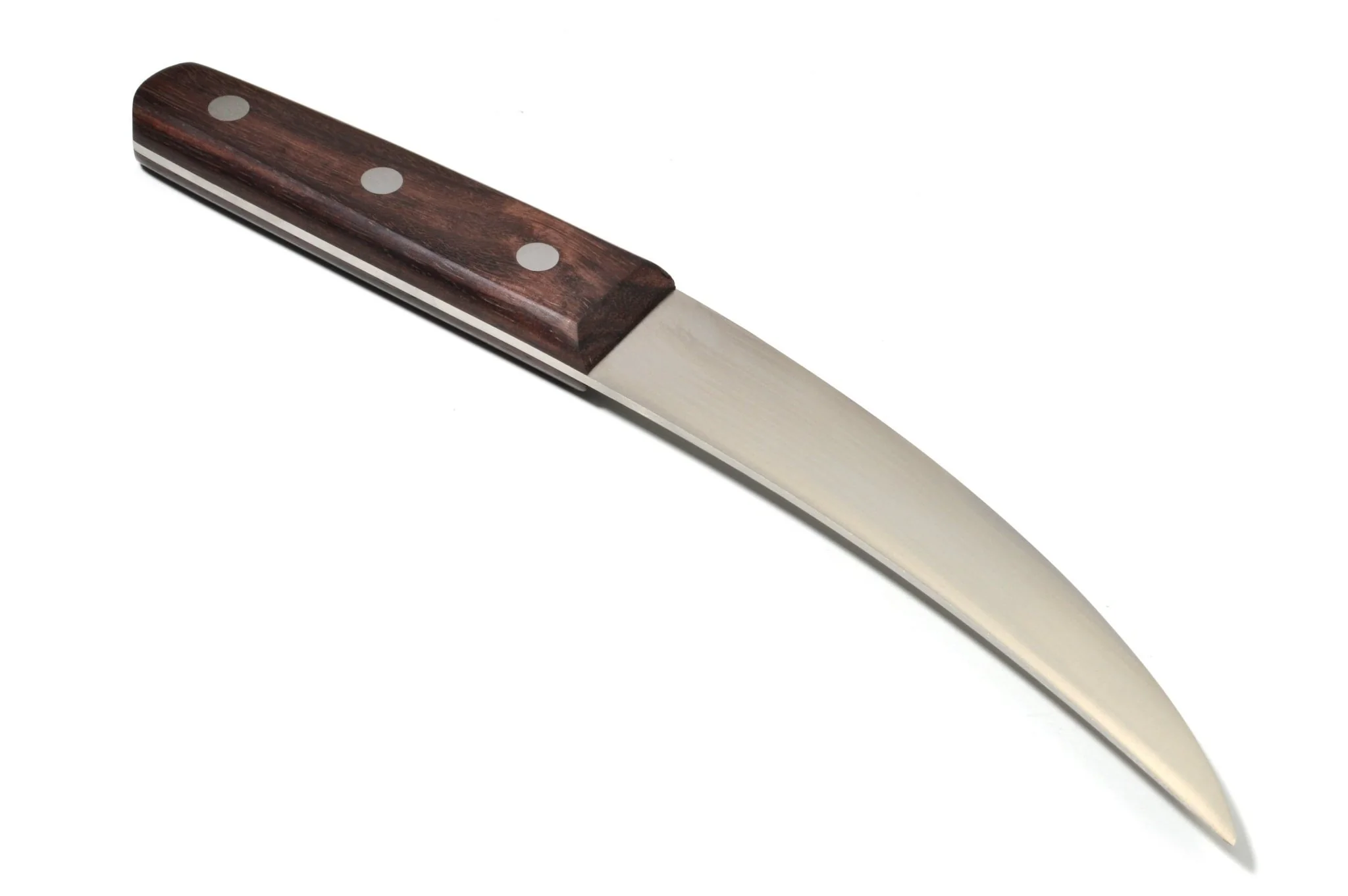
Hand-forged in Shimabara City, Nagasaki Prefecture, this Gyuto comes from the forge of Yosimitu Kajiya, an independent third-generation blacksmith who still works blade by blade, start to finish. With 84 years of accumulated family experience, his approach stays rooted in traditional Japanese forging — where performance, heat treatment, and balance matter more than cosmetic uniformity.
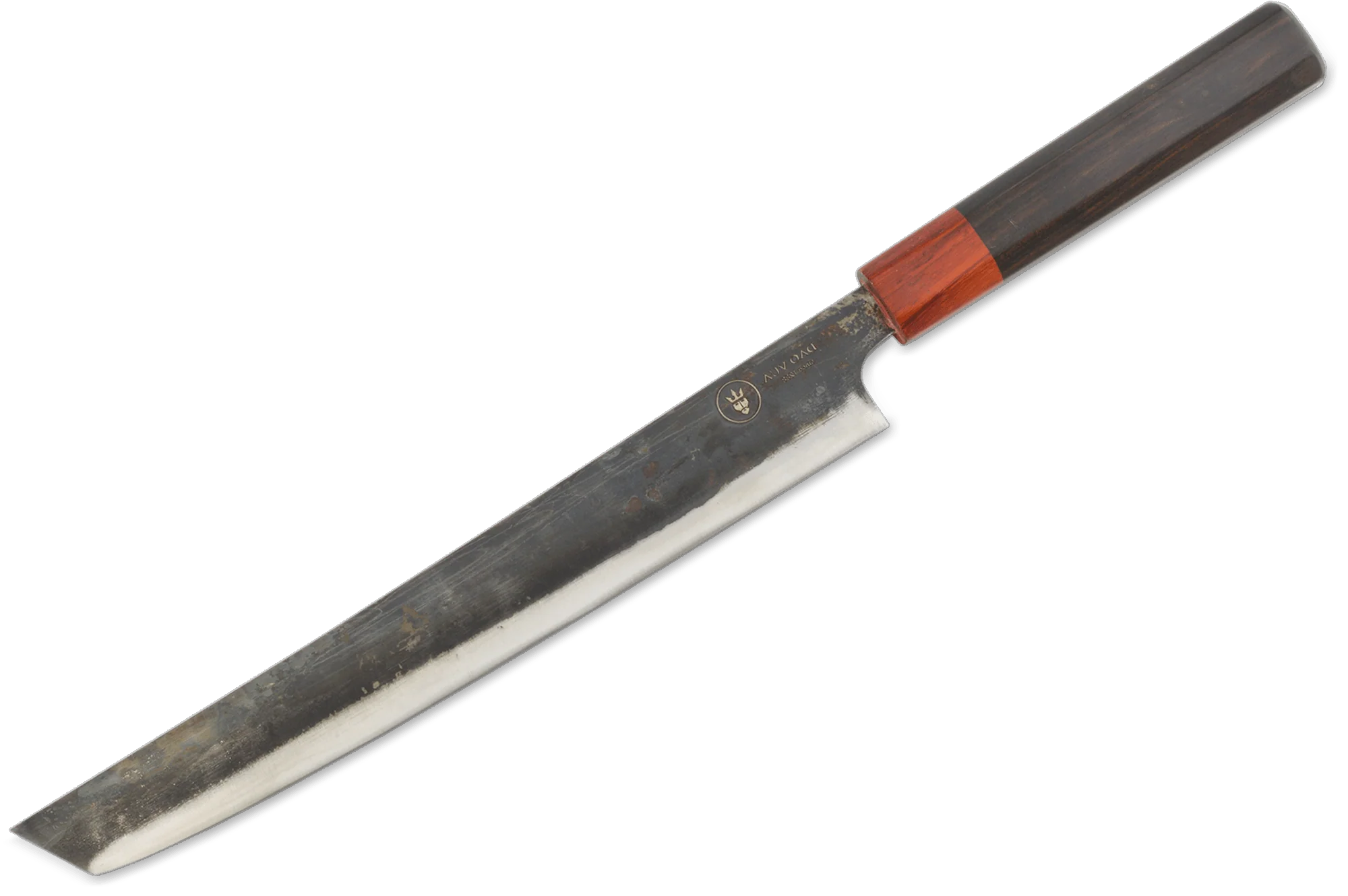
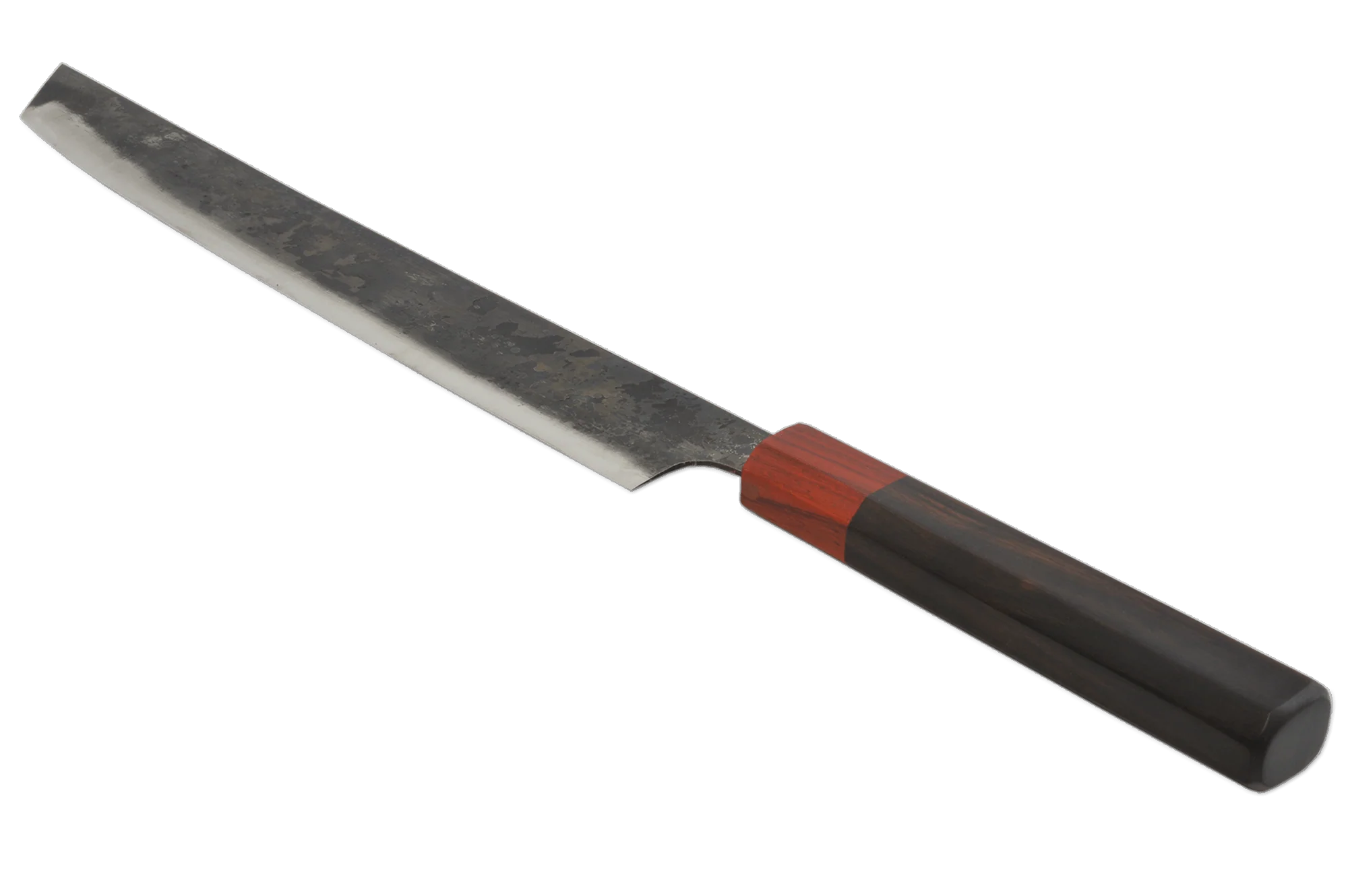
This is a raw, handmade Gyuto. Expect forge character, subtle inconsistencies, and a finish that reflects real hammer-and-anvil work. These details aren’t flaws — they’re proof of the process. If you’re looking for ultra-polished steel, perfectly mirrored bevels, or machine-level symmetry, this handmade version isn’t meant for you. This knife is built for cooks who appreciate tools with soul and visible craftsmanship.
The Gyuto is widely regarded as the most versatile knife in the kitchen — often the only one you truly need. Typically ranging from 210mm to 270mm, it offers a tall heel for comfortable chopping, a flatter rear section for push cuts, a gentle curve toward the tip for rocking motions, and a fine point for detailed work. That balance is exactly why so many chefs rely on the Gyuto as their main knife.
Although the profile may resemble a Western chef’s knife, Japanese Gyutos are known for being lighter, thinner, and more responsive, allowing for smoother cuts and less fatigue over long prep sessions.
SPECIFICATIONS
Knife Style: Gyuto
Steel Type: Carbon Steel
Blade Material: Shirogami White #2
Blade Finish: Kurouchi
Blade Hardness: 62HRC (+/-1)
Bevel: Double
Handle: Poplar
Blade Size: 240mm
Heel Height: 46mm
Spine Thickness: 2.50mm
Weight: 160g
Hand-forged in Shimabara City, Nagasaki Prefecture, this Gyuto comes from the forge of Yosimitu Kajiya, an independent third-generation blacksmith who still works blade by blade, start to finish. With 84 years of accumulated family experience, his approach stays rooted in traditional Japanese forging — where performance, heat treatment, and balance matter more than cosmetic uniformity.
This is a raw, handmade Gyuto. Expect forge character, subtle inconsistencies, and a finish that reflects real hammer-and-anvil work. These details aren’t flaws — they’re proof of the process. If you’re looking for ultra-polished steel, perfectly mirrored bevels, or machine-level symmetry, this handmade version isn’t meant for you. This knife is built for cooks who appreciate tools with soul and visible craftsmanship.
The Gyuto is widely regarded as the most versatile knife in the kitchen — often the only one you truly need. Typically ranging from 210mm to 270mm, it offers a tall heel for comfortable chopping, a flatter rear section for push cuts, a gentle curve toward the tip for rocking motions, and a fine point for detailed work. That balance is exactly why so many chefs rely on the Gyuto as their main knife.
Although the profile may resemble a Western chef’s knife, Japanese Gyutos are known for being lighter, thinner, and more responsive, allowing for smoother cuts and less fatigue over long prep sessions.
Description
SPECIFICATIONS
Knife Style: Gyuto
Steel Type: Carbon Steel
Blade Material: Shirogami White #2
Blade Finish: Kurouchi
Blade Hardness: 62HRC (+/-1)
Bevel: Double
Handle: Poplar
Blade Size: 240mm
Heel Height: 46mm
Spine Thickness: 2.50mm
Weight: 160g
Hand-forged in Shimabara City, Nagasaki Prefecture, this Gyuto comes from the forge of Yosimitu Kajiya, an independent third-generation blacksmith who still works blade by blade, start to finish. With 84 years of accumulated family experience, his approach stays rooted in traditional Japanese forging — where performance, heat treatment, and balance matter more than cosmetic uniformity.
This is a raw, handmade Gyuto. Expect forge character, subtle inconsistencies, and a finish that reflects real hammer-and-anvil work. These details aren’t flaws — they’re proof of the process. If you’re looking for ultra-polished steel, perfectly mirrored bevels, or machine-level symmetry, this handmade version isn’t meant for you. This knife is built for cooks who appreciate tools with soul and visible craftsmanship.
The Gyuto is widely regarded as the most versatile knife in the kitchen — often the only one you truly need. Typically ranging from 210mm to 270mm, it offers a tall heel for comfortable chopping, a flatter rear section for push cuts, a gentle curve toward the tip for rocking motions, and a fine point for detailed work. That balance is exactly why so many chefs rely on the Gyuto as their main knife.
Although the profile may resemble a Western chef’s knife, Japanese Gyutos are known for being lighter, thinner, and more responsive, allowing for smoother cuts and less fatigue over long prep sessions.