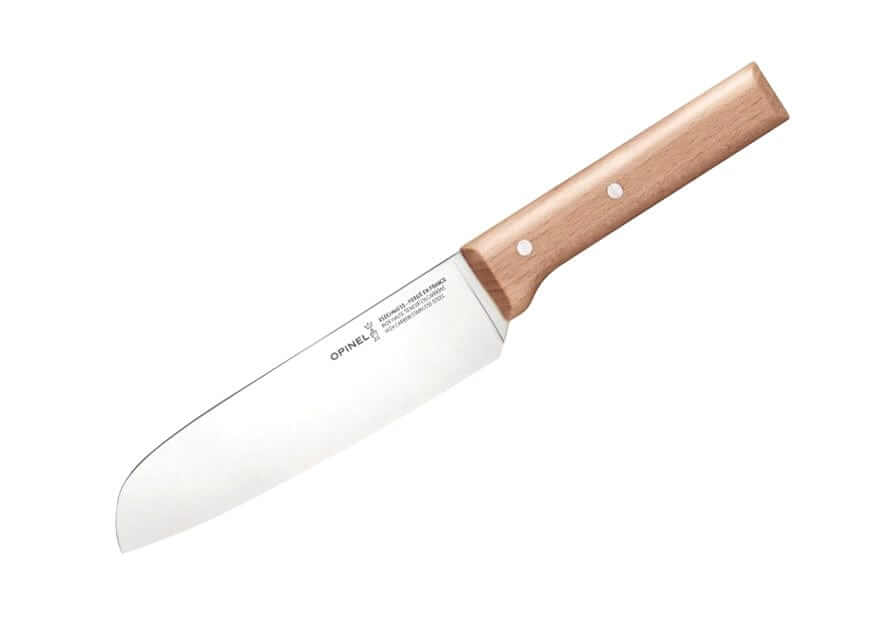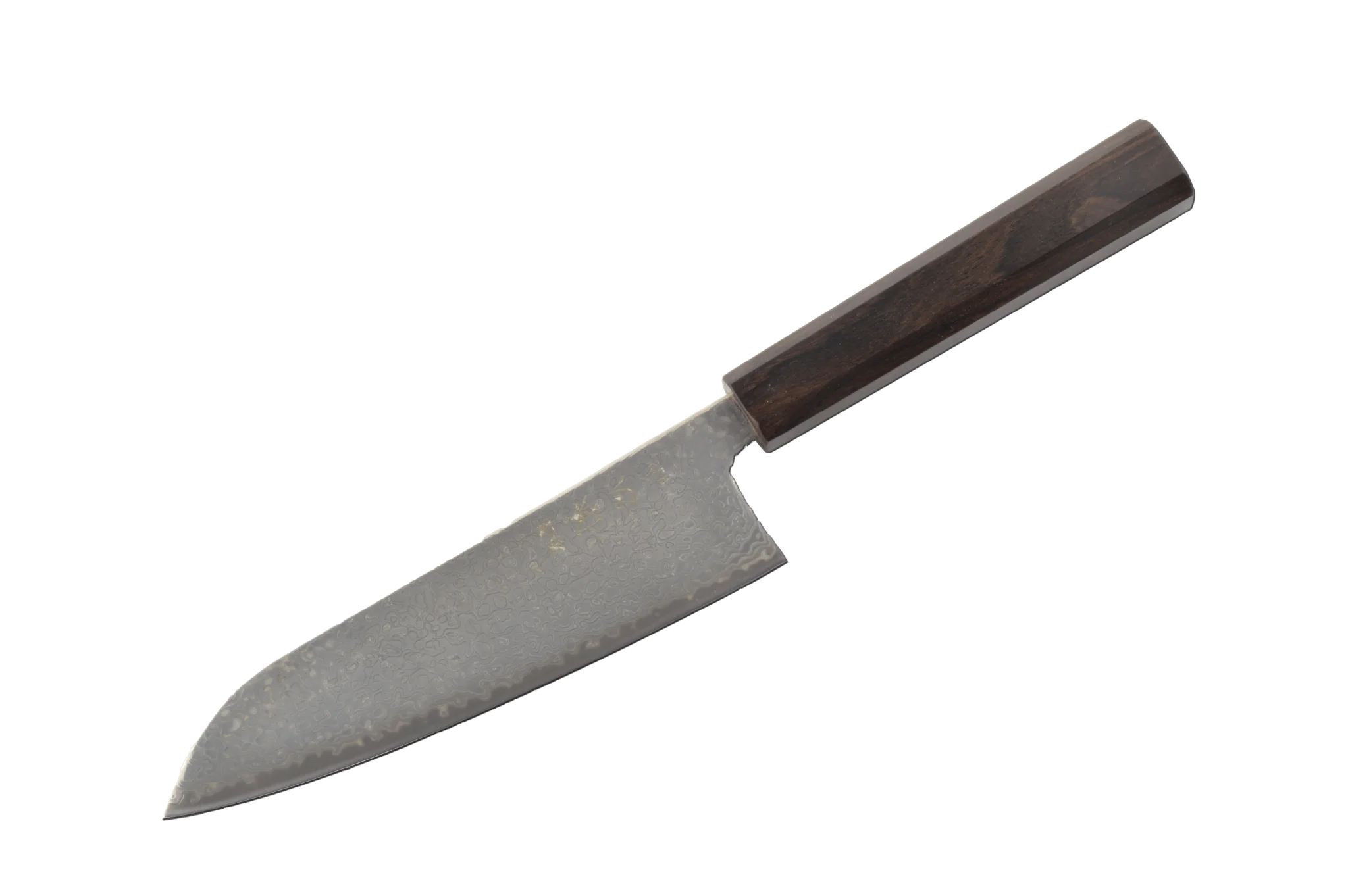
Hatsukokoro Hikari Damascus SLD Ebony Santoku 170mm
.00SPECIFICATIONS
Knife Style: Santoku
Steel Type: Semi-Stainless Steel*
Blade Material: SLD
Blade Finish: Damascus
Blade Hardness: 61HRC (+/-1)
Bevel: Double
Handle: Ebony Wood
Blade Length: 170mm
Heel Height: 46mm
Spine Thickness: 2.00mm
Weight: 151g
Hatsukokoro is more than just a name — it’s a quiet nod to the respect Japan has for craftsmanship and the people behind it. Since 2013, out of Amagasaki City, they’ve been working with some of the country’s most skilled (and often uncredited) blacksmiths, sharpeners, and handle makers. Their house lines are built to let the knife speak for itself — no shortcuts, just solid execution.
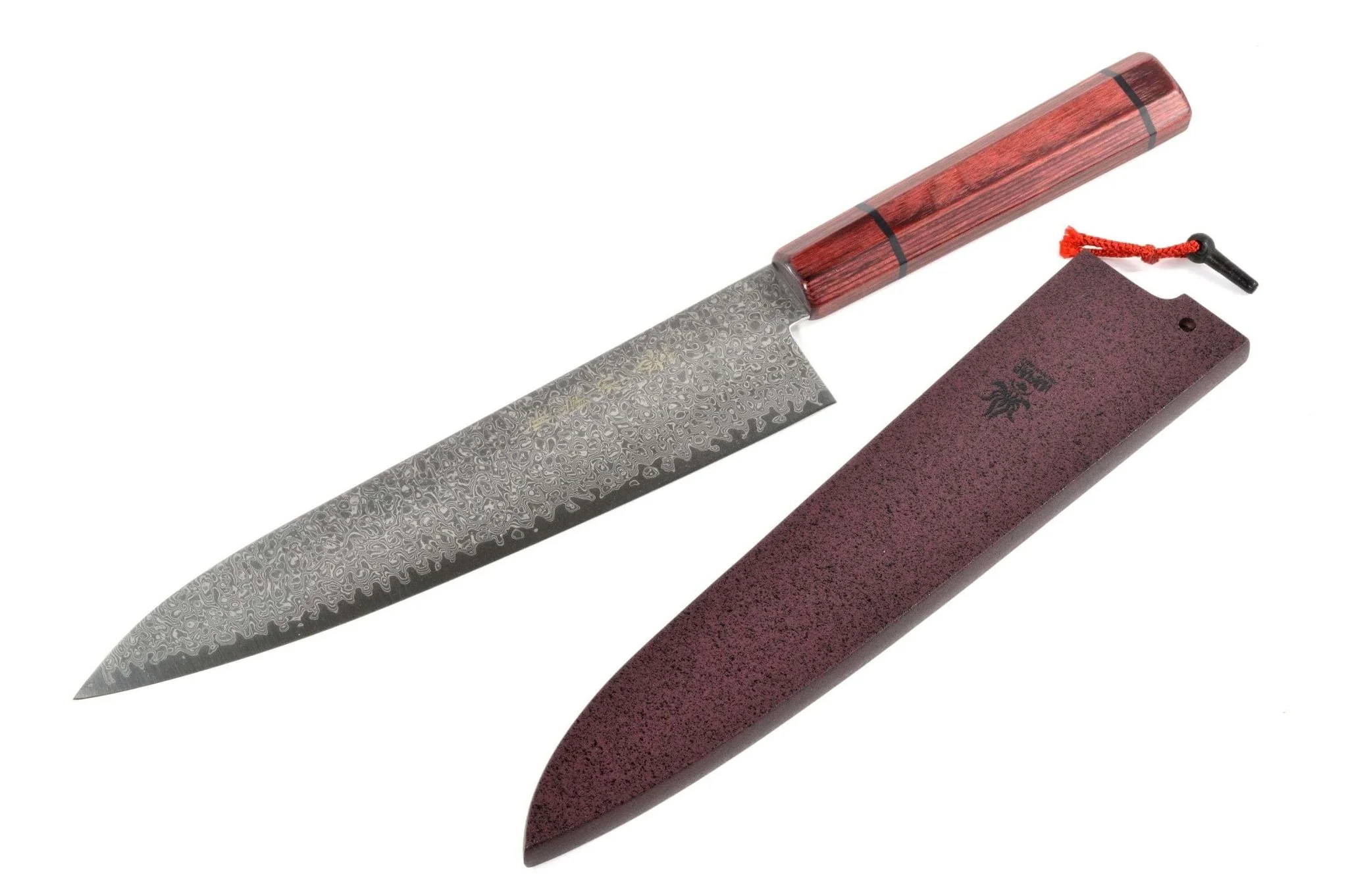
The Kurozome Series is one of their latest standout arrivals. Forged in stainless Damascus, it carries a deep, smoky finish that gives the blade a darker, more refined look while still showing off the layered pattern underneath. It’s not just visual — the core steel holds a sharp edge well, stays easy to live with day-to-day, and doesn’t demand the maintenance of a carbon blade.
Where this series really shines is in the balance between performance and feel. The grind is thin and precise, giving you clean, effortless cuts whether you’re working vegetables, proteins, or finer detail work. It moves light on the board, but still feels stable and controlled in hand. The darker “kuro” finish adds character without being flashy — it’s the kind of knife that looks better the more you use it.
Paired with an octagonal stabilized wood handle, the whole setup feels natural and well-balanced. Comfortable for long prep, with just enough presence to remind you you’re using something a bit special.
As for the 170mm Santoku, this is where it all comes together. It’s that perfect middle ground — compact enough to feel nimble, but with enough length and height to handle real prep. Flat enough for clean chopping, with just enough curve to stay versatile. For most kitchens, this is the kind of knife that ends up living on the board — easy, efficient, and hard to put down.
.00SPECIFICATIONS
Knife Style: Santoku
Steel Type: Semi-Stainless Steel*
Blade Material: SLD
Blade Finish: Damascus
Blade Hardness: 61HRC (+/-1)
Bevel: Double
Handle: Ebony Wood
Blade Length: 170mm
Heel Height: 46mm
Spine Thickness: 2.00mm
Weight: 151g
Hatsukokoro is more than just a name — it’s a quiet nod to the respect Japan has for craftsmanship and the people behind it. Since 2013, out of Amagasaki City, they’ve been working with some of the country’s most skilled (and often uncredited) blacksmiths, sharpeners, and handle makers. Their house lines are built to let the knife speak for itself — no shortcuts, just solid execution.
The Kurozome Series is one of their latest standout arrivals. Forged in stainless Damascus, it carries a deep, smoky finish that gives the blade a darker, more refined look while still showing off the layered pattern underneath. It’s not just visual — the core steel holds a sharp edge well, stays easy to live with day-to-day, and doesn’t demand the maintenance of a carbon blade.
Where this series really shines is in the balance between performance and feel. The grind is thin and precise, giving you clean, effortless cuts whether you’re working vegetables, proteins, or finer detail work. It moves light on the board, but still feels stable and controlled in hand. The darker “kuro” finish adds character without being flashy — it’s the kind of knife that looks better the more you use it.
Paired with an octagonal stabilized wood handle, the whole setup feels natural and well-balanced. Comfortable for long prep, with just enough presence to remind you you’re using something a bit special.
As for the 170mm Santoku, this is where it all comes together. It’s that perfect middle ground — compact enough to feel nimble, but with enough length and height to handle real prep. Flat enough for clean chopping, with just enough curve to stay versatile. For most kitchens, this is the kind of knife that ends up living on the board — easy, efficient, and hard to put down.
Original: $125.48
-65%$125.48
$43.92Description
.00SPECIFICATIONS
Knife Style: Santoku
Steel Type: Semi-Stainless Steel*
Blade Material: SLD
Blade Finish: Damascus
Blade Hardness: 61HRC (+/-1)
Bevel: Double
Handle: Ebony Wood
Blade Length: 170mm
Heel Height: 46mm
Spine Thickness: 2.00mm
Weight: 151g
Hatsukokoro is more than just a name — it’s a quiet nod to the respect Japan has for craftsmanship and the people behind it. Since 2013, out of Amagasaki City, they’ve been working with some of the country’s most skilled (and often uncredited) blacksmiths, sharpeners, and handle makers. Their house lines are built to let the knife speak for itself — no shortcuts, just solid execution.
The Kurozome Series is one of their latest standout arrivals. Forged in stainless Damascus, it carries a deep, smoky finish that gives the blade a darker, more refined look while still showing off the layered pattern underneath. It’s not just visual — the core steel holds a sharp edge well, stays easy to live with day-to-day, and doesn’t demand the maintenance of a carbon blade.
Where this series really shines is in the balance between performance and feel. The grind is thin and precise, giving you clean, effortless cuts whether you’re working vegetables, proteins, or finer detail work. It moves light on the board, but still feels stable and controlled in hand. The darker “kuro” finish adds character without being flashy — it’s the kind of knife that looks better the more you use it.
Paired with an octagonal stabilized wood handle, the whole setup feels natural and well-balanced. Comfortable for long prep, with just enough presence to remind you you’re using something a bit special.
As for the 170mm Santoku, this is where it all comes together. It’s that perfect middle ground — compact enough to feel nimble, but with enough length and height to handle real prep. Flat enough for clean chopping, with just enough curve to stay versatile. For most kitchens, this is the kind of knife that ends up living on the board — easy, efficient, and hard to put down.